
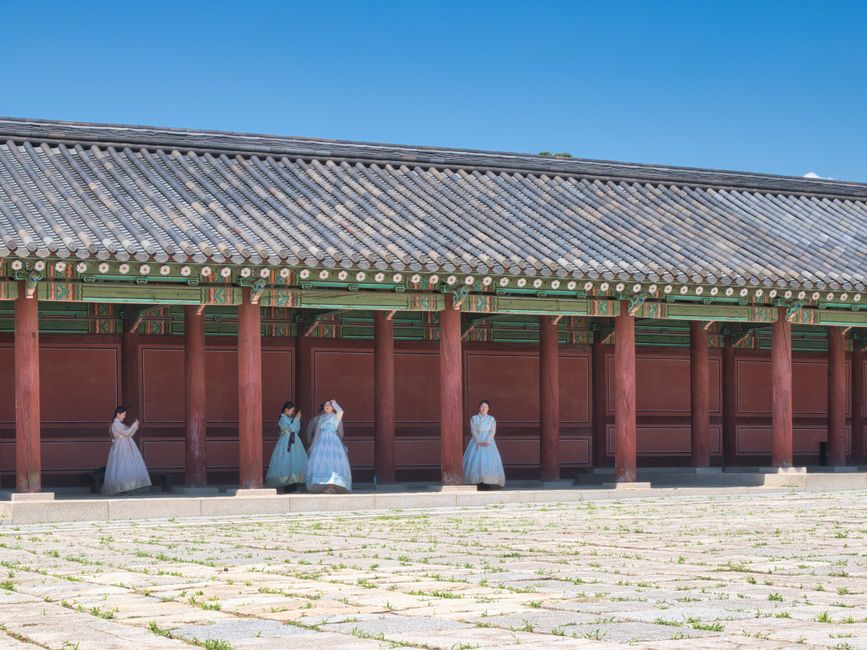
Dress Like Royalty: Hanbok Adventures & Palace Wonders
Imagine stepping back in time, draped in the exquisite colors and flowing silks of a traditional Hanbok! This isn’t just a costume; it’s your personal gateway to experiencing South Korea’s rich heritage firsthand. You’ll find countless rental shops, especially in vibrant areas like Insadong or Bukchon Hanok Village, where a 4-hour Hanbok rental typically costs a delightful 15,000 KRW to 30,000 KRW, often including basic hair styling to complete your regal transformation.
Once you’re adorned in your stunning Hanbok, the ancient palaces of Seoul become your playground. Head straight to the magnificent Gyeongbokgung Palace, where the entrance fee for adults (ages 19-64) is usually 3,000 KRW. But here’s an incredible insider tip: if you arrive wearing a Hanbok, your admission is absolutely free! It’s an amazing way to save a few won while capturing truly unforgettable photos against a backdrop of majestic architecture and serene courtyards.
Strolling through these historic grounds in your traditional attire creates an immersive experience unlike any other. You’ll feel a profound connection to the past, as if you’ve walked right into a historical drama. Don’t miss the chance to explore every intricate detail, from the vibrant painted eaves to the tranquil ponds, all while looking like a true Korean dignitary.

Taste of Tradition: Savoring Korean Delights
Prepare your taste buds for an exhilarating journey through South Korea’s culinary landscape, a vital part of any South Korea culture guide! From sizzling street food to comforting traditional dishes, every bite tells a story. You absolutely must dive into a steaming bowl of Tteokbokki, those chewy rice cakes bathed in a fiery, sweet, and savory gochujang sauce. A standard serving from a bustling street vendor in Myeongdong or Hongdae will only set you back approximately 4,000 KRW to 6,000 KRW, a true budget-friendly feast!
Beyond the street stalls, explore the aromatic world of Korean BBQ, where succulent meats grill right at your table, or warm your soul with a hearty bowl of Bibimbap. Each region offers its own unique specialties, inviting you to discover new flavors around every corner. Don’t forget to pair your meals with refreshing local beverages, from crisp soju to sweet makgeolli.
And for a truly unique cultural experience that delights all your senses, make time for a performance at the Nanta Theatre. This non-verbal, high-energy show blends traditional Korean rhythms with modern comedy and kitchen antics, creating an unforgettable spectacle that’s as entertaining as any culinary masterpiece. It’s a vibrant celebration of Korean creativity that will leave you smiling long after the curtain falls.

Unearthing History: South Korea’s Treasured Gems
South Korea is a treasure trove of history, boasting an impressive 16 UNESCO World Heritage sites that invite you to delve deep into its ancient past. Imagine wandering through the serene beauty of the Changdeokgung Palace Complex, with its secret garden, or stepping into the living history of the Historic Villages of Korea, Hahoe and Yangdong, where centuries-old traditions still thrive. These sites offer a profound glimpse into the architectural brilliance and societal structures of bygone eras.
For an even deeper dive into the nation’s heritage, the National Museum of Korea in Seoul is an absolute must-visit. You’ll be thrilled to know that admission to its permanent exhibitions is completely free, allowing you to explore millennia of art, artifacts, and cultural evolution without a single worry. Special exhibitions, which rotate regularly and offer unique insights, typically cost a modest 5,000 KRW to 15,000 KRW.
Venture further afield to places like Jeonju Hanok Village, where you can truly immerse yourself in traditional Korean life, staying in a hanok guesthouse and savoring the region’s famous bibimbap. Each historical site offers a unique narrative, painting a vivid picture of the resilience, artistry, and spiritual depth that define the Korean spirit. This comprehensive South Korea culture guide ensures you won’t miss a single historical gem.

Unlock Local Secrets: Insider Tips for Culture Buffs
To truly connect with the heart of South Korea, embracing local customs is key. When you visit temples or traditional homes, always remember to remove your shoes before entering; look for designated shoe racks or areas, it’s a sign of respect that locals deeply appreciate. For seamless navigation and a wealth of information, download the ‘VisitKorea’ official app – it’s your ultimate companion, providing detailed insights on cultural sites, events, and often includes audio guides in multiple languages.
Communication will be a breeze with the ‘Naver Papago’ app, your real-time translation hero, especially useful for understanding menus or signs in less touristy areas. And if you’re eager to explore major palaces like Gyeongbokgung without the bustling crowds, plan your visit right at opening time, usually 9:00 AM, or an hour before closing. You’ll enjoy a more tranquil and intimate experience.
Finally, make an effort to learn a few basic Korean phrases like ‘Annyeonghaseyo’ (Hello) and ‘Gamsahamnida’ (Thank you). Locals genuinely appreciate the effort, and it often opens doors to warmer interactions. For a taste of modern culture, consider a K-Pop Dance Academy class – it’s a fantastic way to experience the vibrant energy that captivates the world. These insider tips will elevate your journey through the incredible South Korea culture guide.